
Postdoctoral Research Associate
🏔️ Cooperative Institute for Research in Environmental Sciences (CIRES), University of Colorado Boulder
🌎 NOAA Global Monitoring Laboratory
I am currently a Postdoctoral Research Associate at the Cooperative Institute for Research in Environmental Sciences (CIRES), University of Colorado Boulder and the NOAA Global Monitoring Laboratory. I am currently working with Dr. Aleya Kaushik on a NOAA/NIDIS-funded research project focused on drought and carbon cycle dynamics in the Western United States.
I recently completed my Ph.D. at Johns Hopkins University, where I worked in Prof. Scot Miller's Greenhouse Gas Lab. My dissertation was titled, “U.S. emissions of trace gas air pollutants inferred from a long-term atmospheric measurement network: from fumigants to fossil fuels.”
Education
In my work, I use atmospheric measurements of greenhouse gases and air pollutants, along with atmospheric models, inverse models, and process/physics-based models to better understand surface emissions of planet-warming and/or stratospheric ozone-depleting gases. I study both natural (biogenic) and human-caused (anthropogenic) emissions sources with the goal of holistically understanding changes and variations in Earth's atmospheric composition.
I'm broadly interested in greenhouse gases, ozone-depleting substances, air pollution, atmospheric chemistry, climate change, Earth systems, sustainability, and environmental justice.
My current focus is on carbon cycle and drought dynamics in the Western United States, integrating NOAA GGGRN flask measurements; satellite instruments like FluxSat, TROPOMI, OCO-2, GRACE, etc.; reanalysis datasets like ERA5-Land; and process-based models like the Simple Biosphere Model v4 (SiB4).
Research
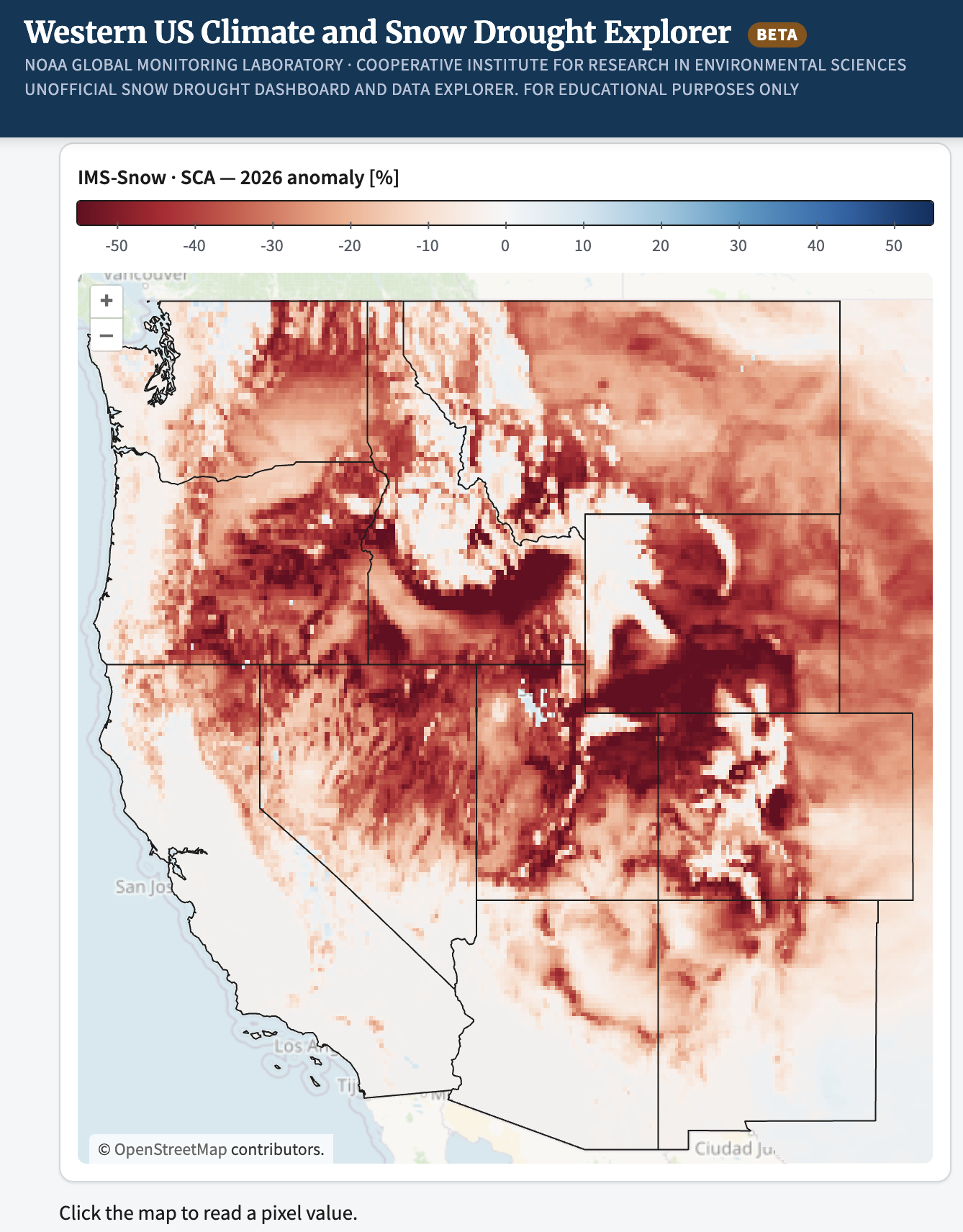
We recently launched snowdrought.org, an interactive research dashboard with maps, time series, seasonal cycles, and cross-product anomalies of snow, water, carbon, and vegetation across the Western U.S. (1990–2026).
Explore snowdrought.org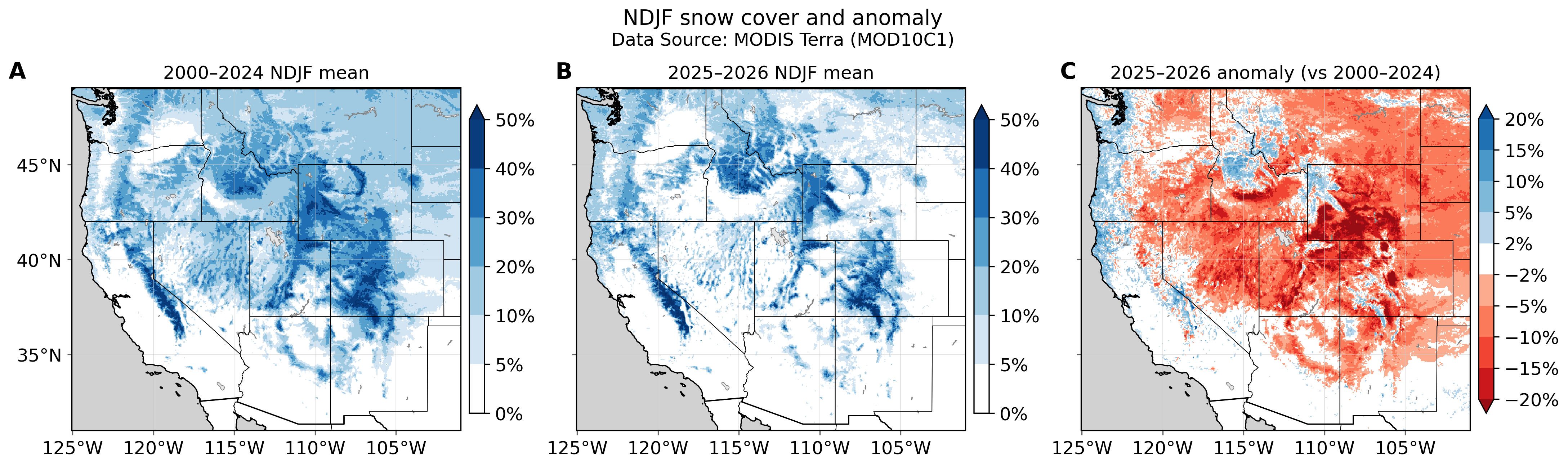
Research
MODIS Terra (MOD10C1) wintertime mean (November-February) snow cover shows a widespread negative anomaly across the Western U.S. in 2025–2026 relative to the 2000–2024 baseline, part of ongoing work linking snow drought to biospheric carbon cycle responses.
Research
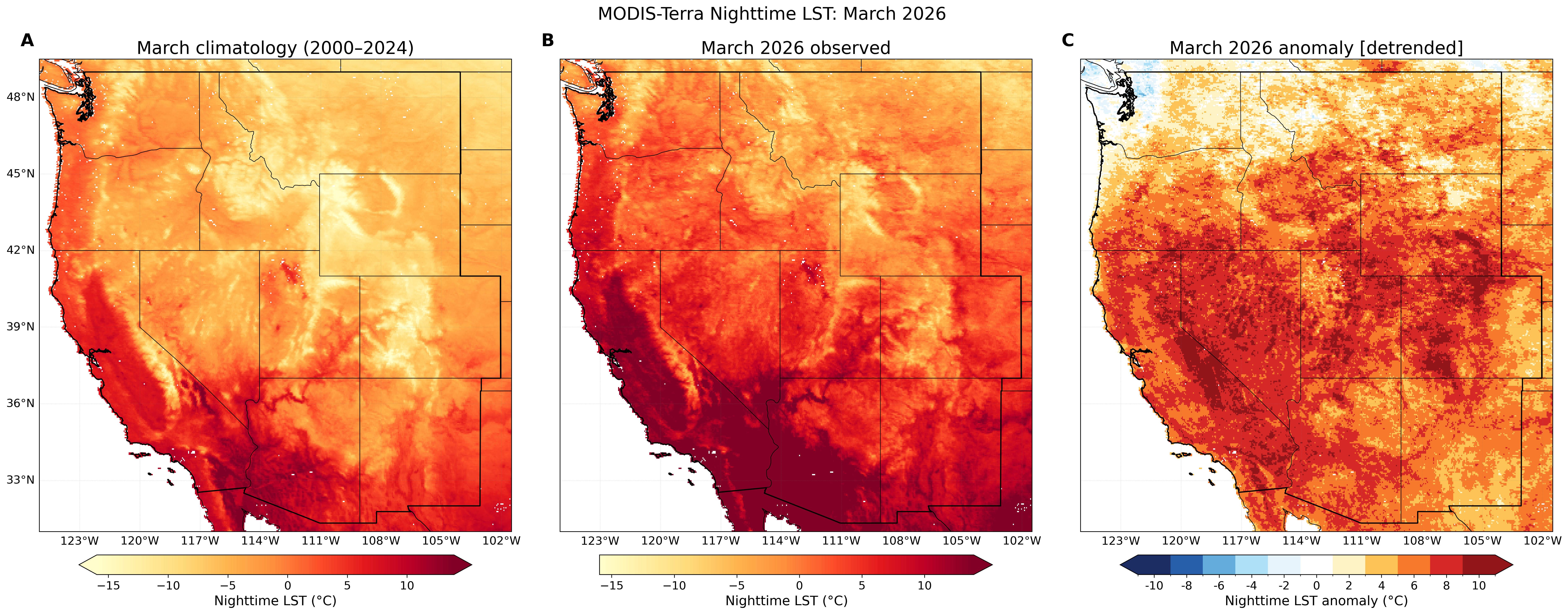
MODIS Terra nighttime land surface temperature (LST) for March 2026 across the Western U.S.: 2000–2024 climatology, 2026 observed, and detrended anomaly.
Research
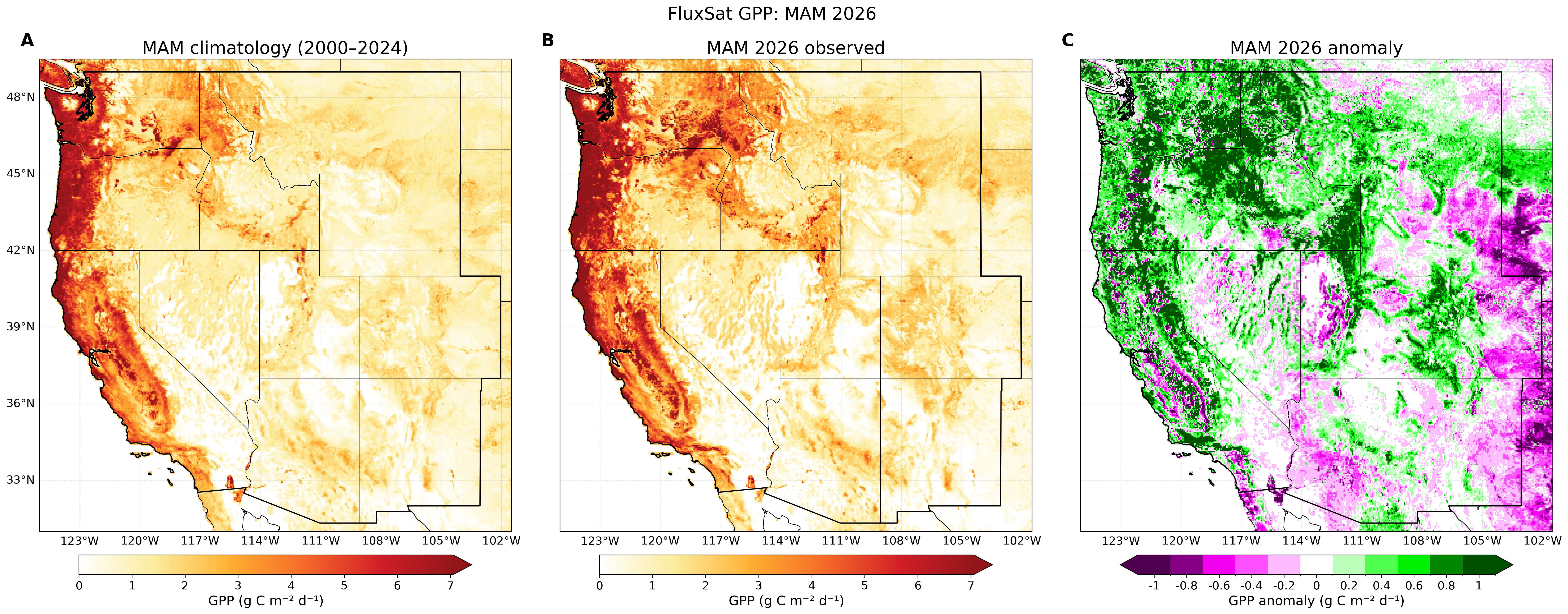
FluxSat gross primary production (GPP) for March–May 2026 across the Western U.S.: 2000–2024 climatology, 2026 observed, and anomaly.
Research
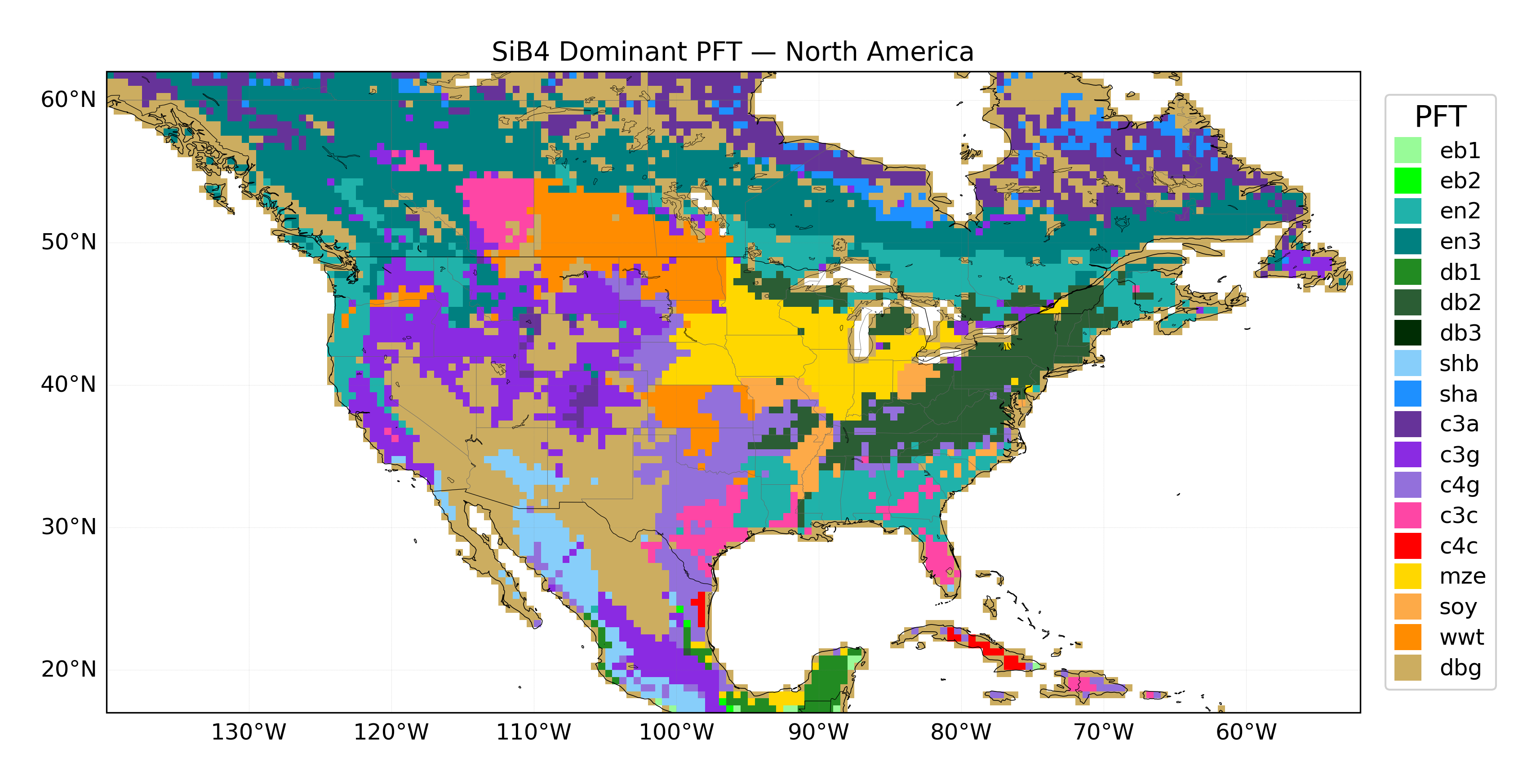
The Simple Biosphere Model v4 (SiB4) is a land surface model that simulates carbon, water, and energy exchange between vegetation and the atmosphere. Each grid cell contains a mix of PFTs; the map shows the single most abundant PFT per cell, revealing broad patterns across North America — evergreen needleleaf forest across the boreal north, C3 grass and shrub through the Intermountain West and Great Basin, winter wheat across the northern Great Plains, maize and soybean through the Corn Belt, C4 grassland across the southern Great Plains and Texas, deciduous broadleaf forest through the Midwest and East, and desert shrubland and bare ground across the Southwest.
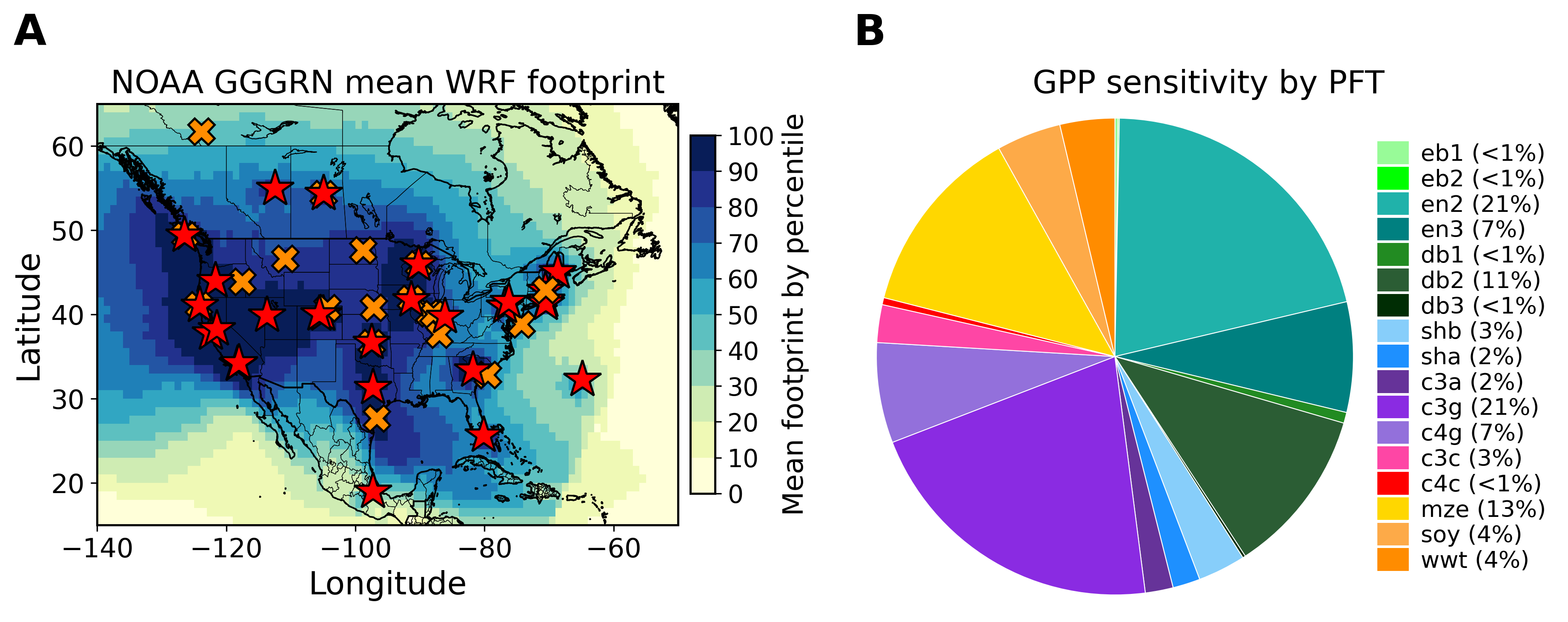
The NOAA GGGRN collects and measures flask samples across this same diversity of biomes, quantifying carbon dioxide (CO₂), carbonyl sulfide (COS), and the isotopes ¹³C and ¹⁴C, which serve as tracers of photosynthesis, respiration, fossil fuel combustion, and biosphere drought response. In addition to satellite and remote sensing data, these trace gas measurements provide critical insight into both anthropogenic and biogenic drivers of atmospheric composition change.
Satellite-based emissions estimate indicates progress toward China's methane mitigation goals
In Review, Communications Earth & Environment, 2026 · https://arxiv.org/abs/2607.16931
Atmospheric observations reveal missing CH₄ fluxes from the North Slope of Alaska
In Review, Atmospheric Chemistry and Physics, 2026
A decline in methyl bromide emissions from the U.S. over 2007–2022
In preparation, 2026
Emissions of propane, butane, and pentane from fossil fuel activities in the U.S.
In preparation, 2026
U.S. oil and gas methane emission intensity declined 2019–2024 with little indication of federal policy impact
Communications Earth & Environment, 2026 · https://doi.org/10.1038/s43247-026-04039-0
Methane fluxes from Arctic & boreal North America: comparisons between process-based estimates and atmospheric observations
Atmospheric Chemistry and Physics, 2026 · https://doi.org/10.5194/acp-26-1229-2026
Spatial and Temporal Distribution of Global Wetland Methane Emissions During 2019–2020 Estimated From Satellite Observations
JGR Atmospheres, 2025 · https://doi.org/10.1029/2025JD044354
California dominates U.S. emissions of the pesticide and potent greenhouse gas sulfuryl fluoride
Communications Earth & Environment, 2024 · https://doi.org/10.1038/s43247-024-01294-x
U.S. ethane emissions and trends estimated from atmospheric observations
Environmental Science & Technology, 2024 · https://doi.org/10.1021/acs.est.4c00380
The Orbiting Carbon Observatory-2 (OCO-2) and in situ CO₂ data suggest a larger seasonal amplitude of the terrestrial carbon cycle compared to many dynamic global vegetation models
Remote Sensing of Environment, 2024 · https://doi.org/10.1016/j.rse.2024.114326
Inter-Annual Variability in Atmospheric Transport Complicates Estimation of US Methane Emissions Trends
Geophysical Research Letters, 2023 · https://doi.org/10.1029/2022GL100366
Greenhouse Gas Emissions Inventory for the City of Baltimore, 2018–2020
Report for the Baltimore Office of Sustainability, 2022 · https://www.baltimoresustainability.org/wp-content/uploads/2023/04/2020_Baltimore_GHG_inventory_v2.pdf
City of Baltimore 2017 Greenhouse Gas Emissions Inventory Report
Report for the Baltimore Office of Sustainability, 2020 · https://www.baltimoresustainability.org/wp-content/uploads/2021/09/2017_Baltimore_Inventory_v5-1.pdf
Postdoctoral Research Associate
CIRES, University of Colorado Boulder · NOAA Global Monitoring Laboratory · Boulder, CO
Carbon cycle and drought dynamics; integrating NOAA GGGRN flask measurements; satellite instruments like FluxSat, TROPOMI, OCO-2, GRACE, etc.; reanalysis datasets like ERA5-Land; and process-based models like the SiB4 land surface model to better understand biospheric responses to drought in the Western United States.
Human Frontier Collective Specialist — GenAI
Scale AI · San Francisco, CA (remote)
Developing evaluation frameworks and contributing climate science and atmospheric chemistry domain expertise to assess and improve next-generation generative AI models.
Doctoral Researcher, Greenhouse Gas Research Group
Johns Hopkins University · Baltimore, MD
Modeled U.S. emissions of sulfuryl fluoride, methyl bromide, and C₃–C₅ alkanes using long-term NOAA GGGRN atmospheric measurements and inverse methods.
Applied Data & Governance Fellow
International Innovation Corps, University of Chicago Law School · Chicago, IL
Research support for large-scale randomized control trials in India, including health insurance and wage insurance experiments. Built data pipelines in Python, R, and Stata.
Ph.D., Geography & Environmental Engineering
Johns Hopkins University · Baltimore, MD
Dissertation: U.S. emissions of trace gas air pollutants inferred from a long-term atmospheric measurement network: from fumigants to fossil fuels
Advisor: Prof. Scot M. Miller
M.S., Geophysical Sciences
The University of Chicago · Chicago, IL
Thesis: An Adjoint Trajectory Model of the Perturbed Carbon Cycle
B.S., Applied Mathematics · B.A., Chemistry
University of Rochester · Rochester, NY
Graduated cum laude with Highest Distinction in Chemistry, with Distinction in Mathematics
CIRES, University of Colorado Boulder
NOAA Global Monitoring Laboratory